
Instructor Spotlight: Ken Gerleve
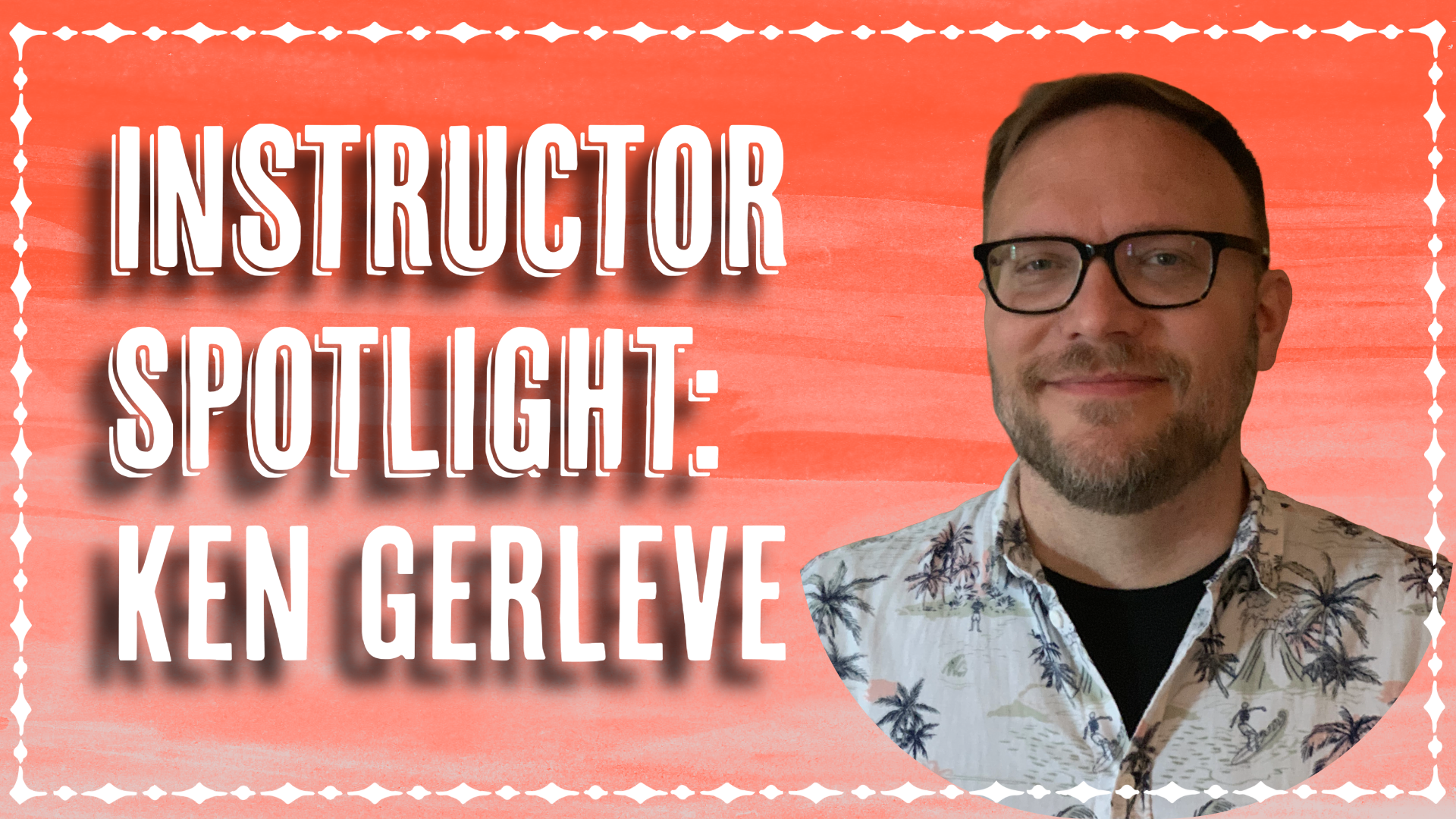
Step into the intricate, shadow-filled worlds of Ken Gerleve, an artist whose work blends gothic storytelling, stagecraft, and the delicate art of paper cutting. Known for his evocative paper vignettes that evoke the magic of miniature theaters, Ken invites viewers to experience narrative through depth, shadow, and motion. This fall, he will be teaching a series of three immersive two-day workshops—Papercuts, Tunnel Books and Toy Theaters, and Carousel Books —where students will learn the fundamentals of cutting paper into striking images and arranging them into dimensional scenes. Using structures like Tunnel and Carousel Books, participants will discover how to craft captivating visual stories that transform simple sheets of paper into theatrical worlds.
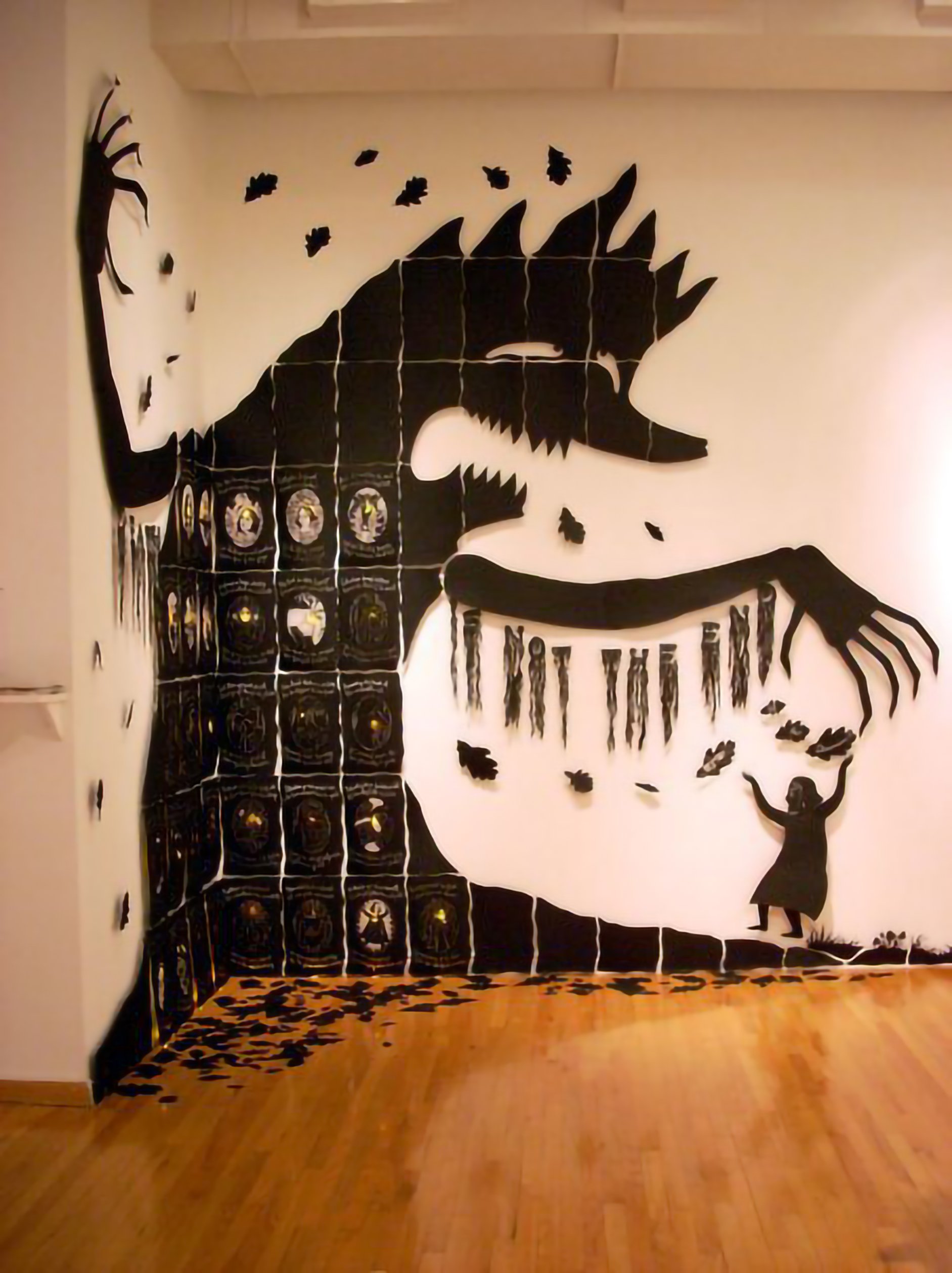
Haunted - Or- Death is Not the End!, 2009
Cut paper, vellum, LED tealight candles,
Approx. 14 × 18 ft.
Tell us a bit about your work.
First and foremost a storyteller, I use narrative and image to tell stories, which are often subversive and darkly humorous. My work juxtaposes traditional elements of the Gothic with contemporary culture. I routinely explore the darker side of childhood, sexuality, gender, and the supernatural. I work in an interdisciplinary fashion, in a broad range of media including installation, sculpture, fiber arts, puppetmaking and miniatures, and often use Scherenschnitte, or paper-cutting, and dimensional book structures, like tunnel books, carousel books, and toy theaters to create narrative vignettes reminiscent of the silhouette animations of Lotte Reiniger.
Tell us about your experience and key highlights of your work as it relates to the workshop you will be teaching for Artists Book House.
My work tends to be project based, so I work in whatever media suits the project. Having said that, much of my past work has used Scherenschnitte or paper cutting techniques, tunnel books and other book structures to create dimensional imagery. I think I'm drawn to this format because much of my personal work is sculptural rather than two dimensional and cutting into paper to produce an image rather than drawing an image feels akin to subtractive sculpture.
Where can readers find examples of your work (i.e. website, social media, publications, etc.)?
www.kennethgerleve.com and IG: @krgerleve
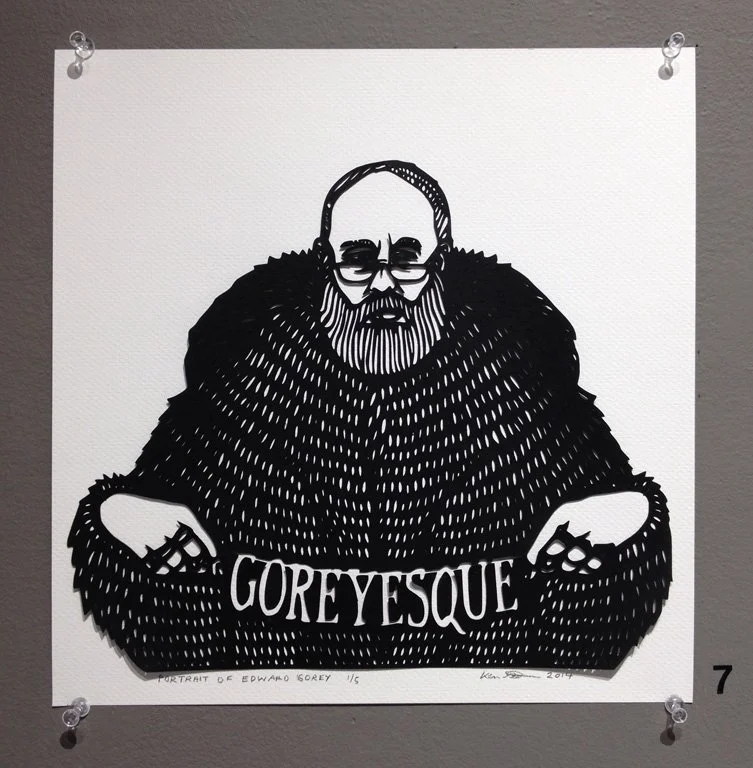
Portrait of Edward Gorey, 2014
Cut black paper mounted on white pastel paper
Approximately 9 × 11 in.
What can prospective students expect to learn in your workshop?
I hope that my students will learn to feel confident cutting images with a blade, and will begin to understand how to create images that have dimension. Similar to theater set pieces, Tunnel Books and Carousel Books are essentially Toy Theaters in book form. There is a parrallaxing effect that happens when you look at these structures as objects where elements are concealed or revealed due to your vantage point as a viewer.
If a student were to walk away with one or two key lessons, skills, or principles from your workshop, what would you hope that would be?
Keep your fingers out of the path of the blade, and be ready to fix your mistakes in creative ways.
Can you name an example or two of past workshops you’ve taught, and what most excited you about them?
I've taught "Papercuts", "Tunnel Books", "Toy Theaters", and "Carousel Books" both for Artists Book House and other organizations. Additionally, I taught community "Cheap Bookbinding" and "Designing the Picture Book" classes for the Columbia College Center for Book and Paper Arts. I'm excited to see how my students create their own worlds inside the various structures I've taught them.
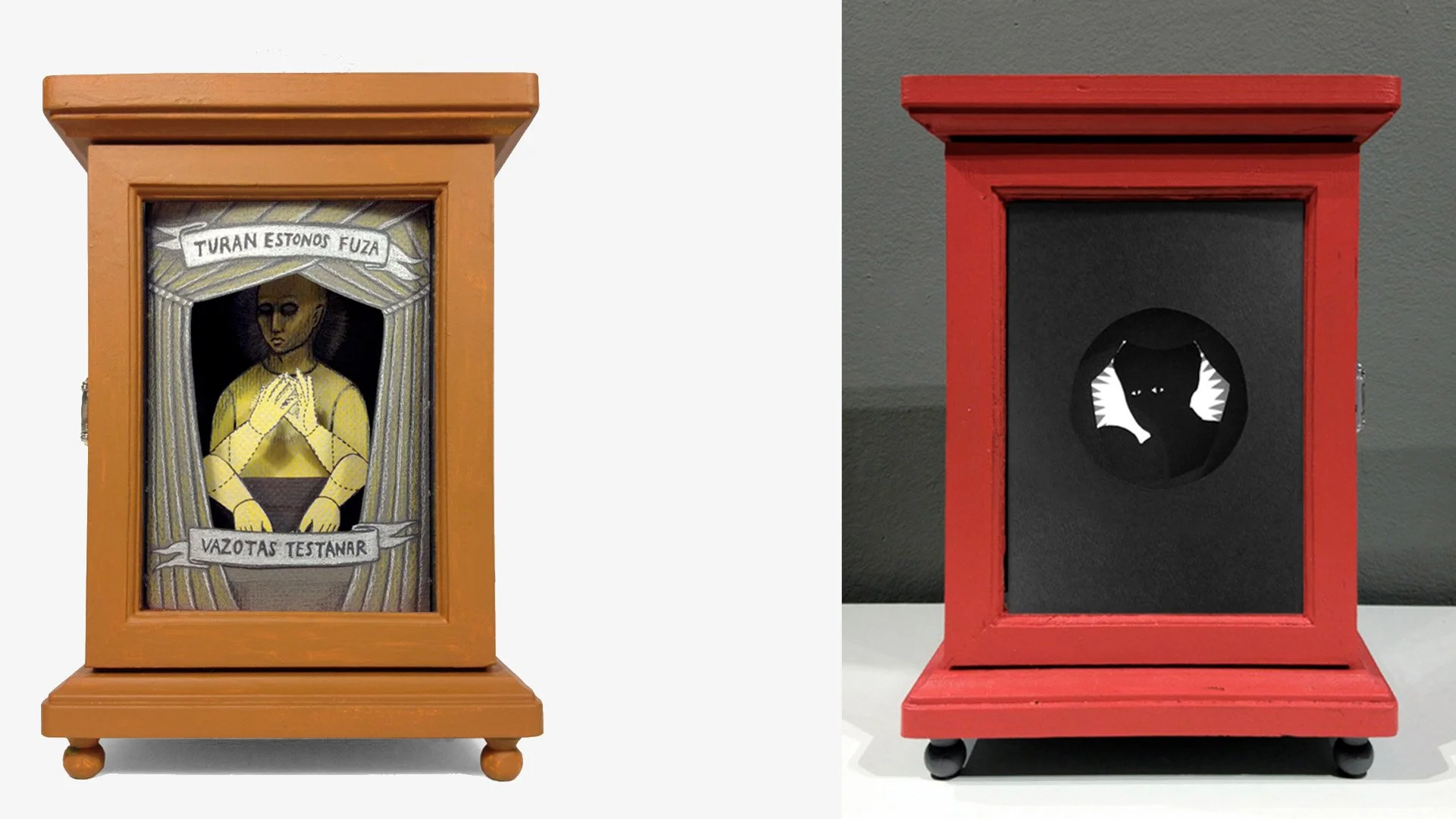
Two tunnel books in display cases made by the artist.
What are the most important features of your workspace (studio, office, etc.)?
The most important feature would be storage. I have so many apothecary style cabinets filled with tiny bits, bobs, and baubles. I'm a hoarder of art supplies, tools, and equipment.
What are some of your favorite tools in your studio?
This really depends on what I'm working on. When I'm making puppets, my favorite tools are basic needle and thread. When sculpting, I have a set of dentist's tools. When I'm making books, a teflon bonefolder and a scoring board for folding concertinas are essential. I also do graphic design and digital illustration, so my iMac and iPad are essential.
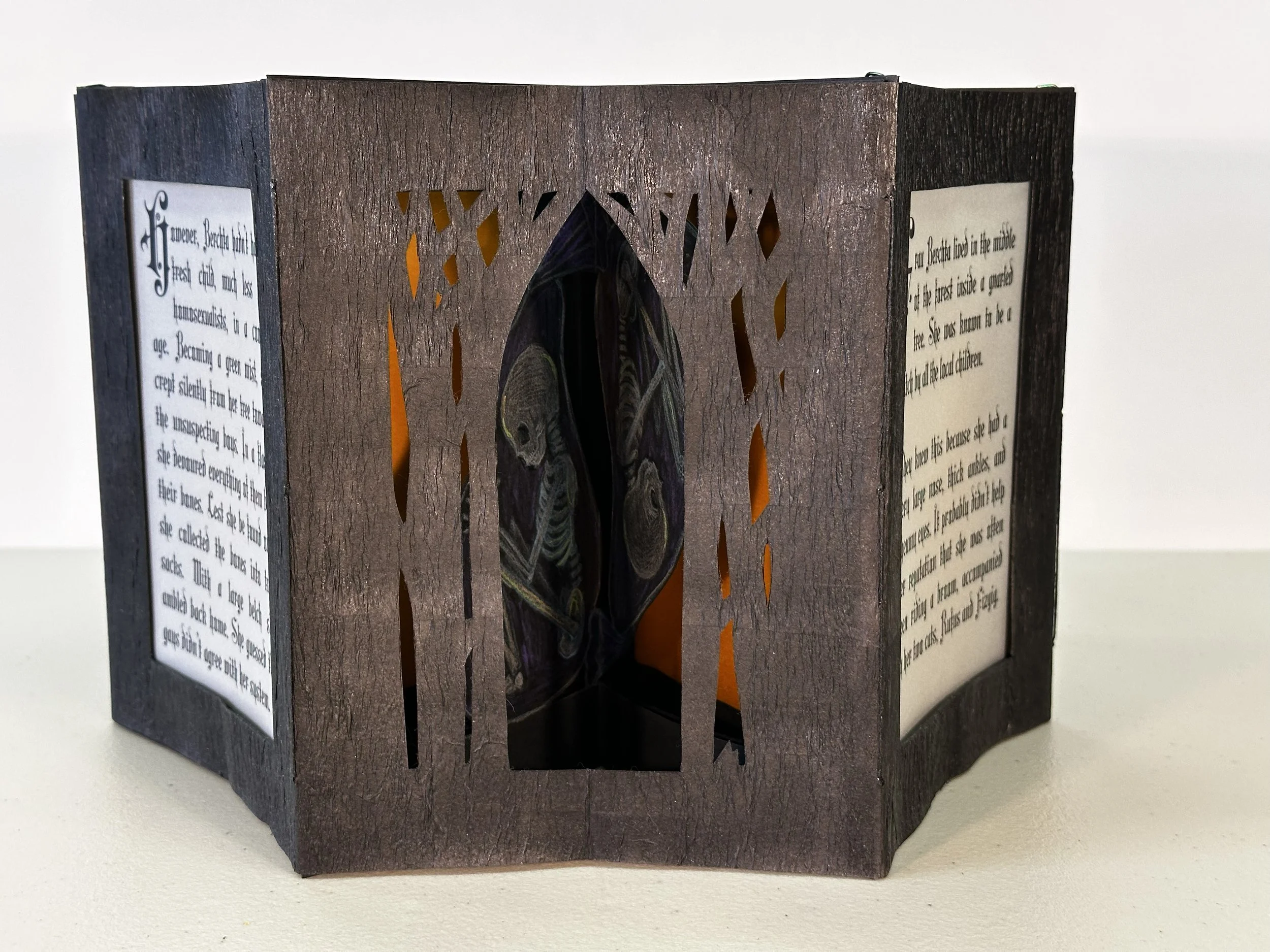
The Perchten, 2010 (1 of 5 Carousel Books)
Mixed media on paper and vellum
Approx. 6 × 8 × 1 in. closed. 12 × 8 × 12 in. open
What inspires and informs your work (other artists, works of art, art forms, aspects of life, etc.)?
I'm a bit of a goth at heart. Gothic novels, ghost stories, and Halloween have always been a part of my identity. I've never considered myself to be a "theater person," but clearly, I have a love of stagecraft and love to create puppets, props, and backdrops as a manifestation of my storytelling process. I have so many artists who inspire my work. For writing, I would say Saki is an inspiration. I like books with rhyming verse, and I've definitely been influenced both in my writing and illustration work by Edward Gorey. Additionally, artists / illustrators like Aubrey Beardsley and Harry Clarke to Charles Addams and Andrea Dezsö. Comics Artists / Cartoonists like Ryan Heshka, Richard Sala, Dame Darcy, and Marcel Dzama. I would say they all deal with the macabre in some form or fashion.
How did you first become associated with ABH?
I graduated with an MFA from the Columbia College Center for Book and Paper Arts (CCCBPA) in 2009. During grad school, I met Audrey Niffenegger (one of the Center's founders), who became my mentor and we worked together on a few independent studies projects involving an illustrated gothic mystery novel called Summerland—about a family of fraudulent spiritualist mediums who build a house to communicate with the dead only to find that the results are quite deadly—which I have been working on since then. In 2011, after being fired from an advertising job, Audrey asked if I wanted to work for her as her studio assistant. Years later, when Columbia closed the CCCBPA, we decided to found Artists Book House, and now 7 years later, I've been involved in every aspect of the organization.
What interests and excites you most about working with ABH?
The feeling that things are finally gaining some momentum and that soon, ABH will really spread its wings and learn to fly.
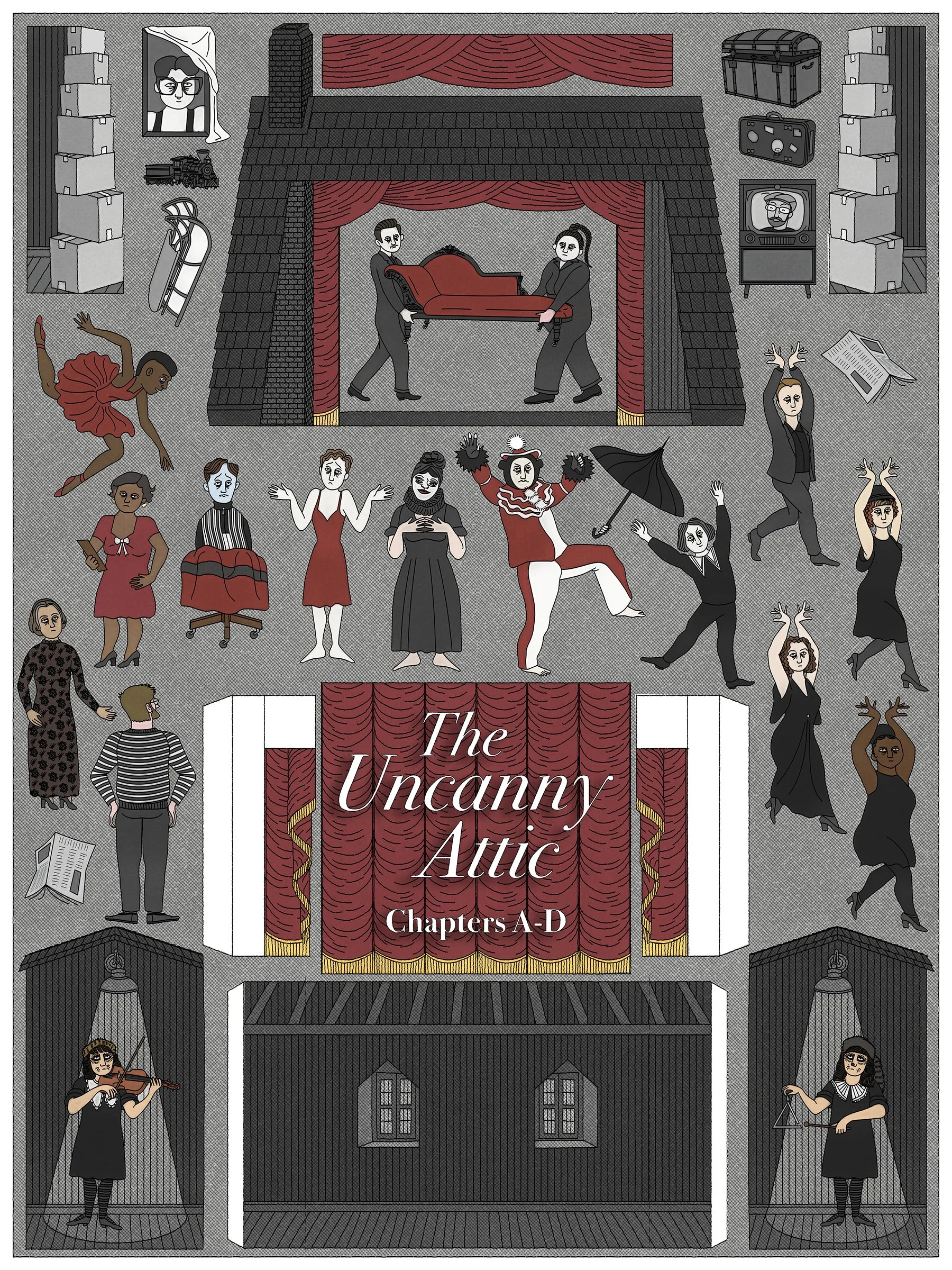
Uncanny Attic - A Toy Theater, 2025 - The poster could be cut up and assembled to create a mini stage with props and characters from the show.
Other than your ABH workshop, can you name a few other key events or projects in your near future?
For the past few years, I have been collaborating with Beautifully Gruesome on their Edward Gorey inspired show The Uncanny Attic, designing and illustrating posters and props, and making a large plush bunraku style puppet of "F is for Fanny, sucked dry by a leech." I'm also still working on Summerland, both writing the text (in rhyming verse) and creating the illustrations (using some of the same techniques taught in Papercuts, Tunnel Books and Toy Theaters, and Carousel Books). Additionally, I continue to make puppets and articulated dolls - mostly as models for my illustrations - in addition to masks, costumes, and the occasional painted sideshow banner.
About Ken Gerleve
Kenneth Gerleve has exhibited works nationally including at the Loyola University Museum of Art, Chicago, Printworks Gallery Chicago, and Dieu Donné in NYC and has work in several private collections. His illustration and design work has been featured in the online literary and art journal Goreyesque, on E-book covers for Zola Books, in Pistil Magazine, the Journal of Artists’ Books and Little Bang. Ken is a co-founder of Artists Book House, and also works for founder Audrey Niffenegger as her studio manager. Ken has also taught various book arts workshops, has worked as a teaching assistant at Penland School of Craft for artist Andrea Deszö, and at Haystack Mountain School of Craft for Audrey Niffenegger. He has made paper for Alison Knowles and Sally Alatalo for Sara Ranchouse Press. Ken earned an MFA in Interdisciplinary Book and Paper Arts from Columbia College Chicago in 2009.